Bokashi Fermentation: A Pathway to Restore Sacred Balance of 'Mizan'
- Home
- Bokashi Fermentation: A Pathway to Restore Sacred Balance of 'Mizan'
14 April 2026
 Article
Article
Bokashi Fermentation: A Pathway to Restore Sacred Balance of 'Mizan'
The escalating waste crisis in Indonesia has reached a critical tipping point, as evidenced by a national emergency where landfill capacities across the archipelago are projected to be exhausted by 2028. Poor waste management and excess input have been notable cause of the problem.
In Pekalongan, the challenge is exacerbated by the official closure of Degayu Landfill on December 5, 2025. When met with culture of arbitrary littering to waterways, rivers such as Mrican and Pencongan became severely polluted, directly impacting the health of the North Coast ecosystem and contributing to the severity of the water bankruptcy issues worldwide.
These issues imply that we need an imminent decentralized waste management - where the responsibility shifts from centralized authorities into the hands of every citizen.
Solving this crisis requires a fundamental shift in how we perceive our place within the natural order. It demands a return to the foundational principles of Mizan. The concept of Mizan, interpreted commonly as 'metaphysical equilibrium' describes a divine balance where every element of the universe is weighted with purpose and interconnectedness, as said in the Quran on Surah Ar-Rahman, verses 7-9.
This philosophy is not exclusive to Islam–many religions convey the same principle. The Bible, for example, embodies this in Genesis 2:15, which calls humanity to work and keep the earth, maintaining an ecological balance where all things are held together in a functional harmony. A similar concept is shown in Buddhism as the concept of Interdependent Origination (Pratītyasamutpāda)–asserting that all phenomena arise, exist, and cease based on interdependent causes and conditions, rather than existing independently or autonomously.
Food waste, making a significant proportion, tipped this sacred balance when discarded into landfills carelessly, resulting in the loss of vital nutrients and the release of harmful methane.
The transgression of this cosmic balance is never a victimless crime–it is a weight borne most heavily by the marginalized. When indigenous communities lose their ancestral lands of both spiritual heritage and ecological survival to the aggressive expansion of mining, and to where industrial waste and city refuse are diverted into the settlements of the poor, we have stained the sacred scale.
By reclaiming our waste through decentralized composting, we are challenging a systemic cycle that treats both the Earth and the vulnerable as irrelevant. We embody the role as reconcilers of this broken cycle, preserving the sanctity of the land rather than defiling it.
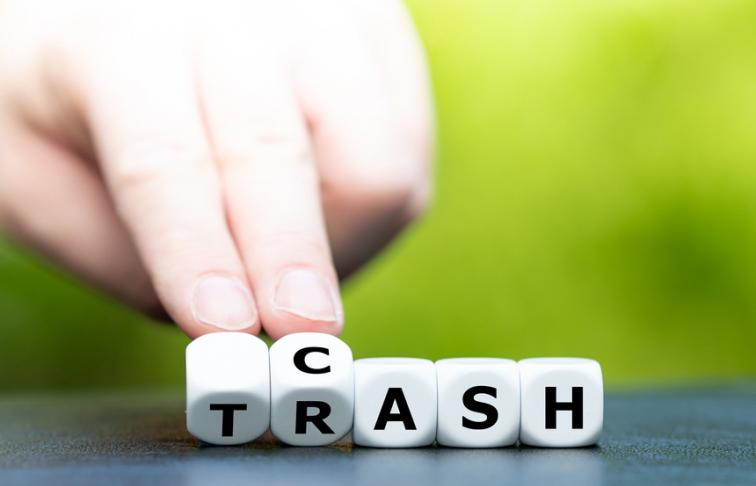
The Bokashi method offers an advanced, anaerobic solution to this crisis by utilizing specialized microorganisms to ferment organic matter. Unlike traditional aerobic composting, which can take months and release unpleasant odors, Bokashi pickles food scraps in a sealed environment, preserving nitrogen and energy that would otherwise be lost. This process is particularly effective for the urban settings of Pekalongan, as it handles dairy, meat, and oils without attracting pests or producing the foul smells that often discourage community participation. The resulting pre-compost is a potent biological asset that revitalizes depleted soil, effectively transforming what was once considered "trash" into a catalyst for new life.
Ultimately, the transition to a zero-waste lifestyle is an act of restoring the symmetry of creation. As we integrate these practices into our schools and homes, we move beyond the "take-make-waste" mentality toward a circular ecology that respects the limits of our environment. By reclaiming our organic waste, we protect our rivers, extend the life of our lands, and honor the delicate balance that sustains all living things.
This shift from consumption to contribution ensures that the legacy we leave for the next generation is not a mountain of waste, but a flourishing, balanced earth.
.jpg)